Program Recordings
The Shulgin Foundation is dedicated to creating and sharing educational resources to the greater community. Whether a program takes place at Shulgin Farm or online, we add it to the growing archival material that the Foundation is responsible for stewarding. Please see below for our educational programs available for complimentary viewing.
PAST COURSES, EVENTS, & WORKSHOPS:
- Oral Histories Series: Carol Randall on the Brotherhood of Eternal Love & LSD History
- Gül Dölen & Hamilton Morris: The Future of Psychedelic Science | Shulgin Foundation x SSDP
- Oral Histories Series: Timothy Leary's Archives & the Women Behind Them
- Lysergamides, LSD, & Ergot with Paul Daley (Psychedelic Chemistry Part 2)
- Yes, Mom Took Acid: Maria Mangini on Psychedelic Elders, Hidden Histories, and the Shulgin Farm
- Ketamine: The Promise & Peril - Healing Potential, Addiction Risk, and Clinical Ethics
- Psychedelic Chemistry Basics, Part 1: Phenethylamines with Dr. Paul Daley
- Sasha Shulgin's Last Stand: Exploring a Luminary's Final Compounds with Dr. Paul Daley
- Separation, Purification and Analysis of Psychoactive Substances with Dr. Paul Daley
- Oral Histories of the Psychedelic Underground with Maria Mangini and Adele Getty
- Octopuses on Ecstasy and the Future of Psychedelics with Dr. Gül Dölen and Joe Dolce
Carol Randall on the Brotherhood of Eternal Love & LSD History
What was it really like to be part of the Brotherhood of Eternal Love, the influential psychedelic community that helped shape the counterculture of the 1960s and 1970s?
In this installment of the Shulgin Foundation's Oral Histories series, Carol Randall, a founding member of the Brotherhood of Eternal Love, joins Mariavittoria Mangini, PhD, for an intimate conversation recorded at the historic Shulgin Farm on September 13, 2026. As the widow of Brotherhood founder John Griggs and longtime partner of fellow founding member Michael Randall, Carol offers a rare firsthand perspective on the early psychedelic movement, the spiritual convictions that brought the Brotherhood together, and the extraordinary lives of those involved.
Throughout the conversation, Carol reflects on her first experiences with LSD, the formation of the Brotherhood of Eternal Love, the distribution of psychedelics during the 1960s and 1970s, and the community's influence on the emerging counterculture. She also shares personal memories of John Griggs, Timothy and Rosemary Leary, the challenges of raising a family while living underground, and her enduring relationship with Michael Randall.
The conversation explores the Brotherhood's relationship with spirituality, communal living, and the belief that psychedelic experiences could transform individual lives and society. Carol also addresses historical misconceptions, offering her own perspective on events and individuals whose stories have often been told by others.
About the Participants
Carol Griggs Randall is a founding member of the Brotherhood of Eternal Love and a firsthand witness to some of the most influential developments in American psychedelic history. Her experiences span the early days of the Brotherhood, the rise of the psychedelic counterculture, and decades spent preserving the stories and values of the community.
Mariavittoria Mangini, PhD, FNP, is a scholar, educator, and board member of the Shulgin Foundation. She is a co-founder of the Women's Visionary Council and a visiting scholar at the Berkeley Center for the Science of Psychedelics. Her work has contributed to the documentation and understanding of psychedelic experiences, history, and culture for decades.
A Note About Michael Randall
This event was originally scheduled as a conversation with both Carol and Michael Randall, founding members of the Brotherhood of Eternal Love. Unfortunately, Michael was unable to attend due to an unexpected medical situation. Although he does not appear in the recording, his contributions to the Brotherhood and his life with Carol remain an important part of the conversation.
About the Shulgin Foundation's Oral Histories Series
The Shulgin Foundation's Oral Histories series preserves the voices, memories, and firsthand experiences of individuals who helped shape the history of psychedelics. Recorded at the historic Shulgin Farm, these conversations contribute to an enduring historical record, documenting stories that might otherwise be lost and making them accessible to researchers, historians, and future generations. The series is part of the Foundation's broader commitment to preserving the legacy of Ann and Sasha Shulgin and advancing the understanding of psychedelic science, history, and culture.
Gül Dölen & Hamilton Morris: The Future of Psychedelic Science | Shulgin Foundation x SSDP
What does the future of psychedelic science look like, and what can the work of Sasha and Ann Shulgin still teach us about where the field goes next?
In this conversation presented by The Shulgin Foundation and Students for Sensible Drug Policy (SSDP), neuroscientist Gül Dölen, MD, PhD, and journalist, researcher, and Hamilton’s Pharmacopeia creator Hamilton Morris explore the current state of psychedelic research, the enduring scientific legacy of Sasha and Ann Shulgin, and some of the biggest questions shaping the field today.
Moderated by Finn McGuinness of SSDP’s Listen to Scientists program, the discussion examines:
- How Sasha and Ann Shulgin influenced modern psychedelic science
- The role psychedelics have played in the development of neuroscience
- Gül Dölen’s research on critical periods, learning, and psychedelics
- Why context may be essential to understanding lasting therapeutic outcomes
- The limitations of overly reductionist explanations of psychedelic effects
- The search for new therapeutic compounds, including molecules described in PIHKAL and TIHKAL
- How drug scheduling and prohibition can affect scientific research
- The challenges of funding basic and clinical psychedelic research
- What the future of psychedelic medicine and neuroscience may look like
ABOUT THE SPEAKERS
Gül Dölen, MD, PhD is Professor and the Renee and Bob Parsons Endowed Chair in the Department of Psychology at UC Berkeley, with appointments in the Helen Wills Neuroscience Institute and Berkeley Center for the Science of Psychedelics. Her research investigates the neuroscience of social behavior, psychedelics, critical periods, and the mechanisms that may allow the brain to reopen windows of heightened learning and plasticity.
Hamilton Morris is a journalist, documentarian, chemist, and scientific researcher best known as the creator and director of Hamilton’s Pharmacopeia. His work explores the chemistry, history, pharmacology, and culture of psychoactive substances.
Finn McGuinness is a Program Assistant with SSDP’s Listen to Scientists program and has a background in behavioral neuroscience and psychiatric care.
The Shulgin Foundation works to preserve and carry forward the legacy of Alexander “Sasha” Shulgin and Ann Shulgin, including their contributions to chemistry, psychedelic science, education, and the responsible exploration of consciousness.
Oral Histories Series: Timothy Leary's Archives & the Women Behind Them
Discover the untold story of Timothy Leary’s archives and the women who helped preserve psychedelic history.
Recorded live at Shulgin Farm, this conversation features Denis Berry and Maria Mangini exploring the hidden labor, personal relationships, and decades of persistence behind the preservation of one of the most important collections in modern psychedelic history.
As president of Timothy Leary’s Futique Trust, Denis Berry became responsible for helping protect and steward hundreds of boxes containing letters, manuscripts, photographs, recordings, scrapbooks, personal documents, and artifacts from Leary’s life and the wider psychedelic movement. Her work helped bring the Timothy Leary archive to the New York Public Library, where these materials could be preserved and made available to researchers, historians, and future generations.
Berry shares how she unexpectedly met Timothy Leary, her memories of his final years, and her friendship with Rosemary Woodruff Leary, with whom she lived for much of a decade. She also recounts the long and uncertain process of finding an institutional home for Leary’s archive and the extraordinary materials that were almost lost along the way.
In conversation with Maria Mangini of The Shulgin Foundation and the Women’s Visionary Council, Berry examines a larger question: Who preserves psychedelic history when the people doing the most important work were never formally recognized?
This Oral Histories Series event explores:
- Timothy Leary’s personal archives and psychedelic legacy
- Denis Berry’s leadership within the Futique Trust
- Rosemary Woodruff Leary’s life and underground history
- The New York Public Library’s Timothy Leary collection
- Women’s overlooked contributions to the psychedelic movement
- The preservation of letters, manuscripts, photographs, and physical archives
- The historical importance of the Shulgin Farm
- How prohibition and criminalization created gaps in psychedelic history
- Why oral histories from psychedelic elders must be recorded now
- How communities can protect the legacies of researchers, guides, activists, and underground practitioners
Much of twentieth-century psychedelic history was never formally documented. Some records were hidden, scattered, destroyed, or never created because the people involved faced surveillance, imprisonment, professional consequences, and social stigma. Oral history therefore offers an essential way to recover the stories that paper archives cannot tell.
This conversation is part of The Shulgin Foundation’s Oral Histories Series, which documents the missing decades of psychedelic practice and honors the elders, mentors, archivists, and community members who carried this knowledge forward.
Lysergamides, LSD, & Ergot with Paul Daley (Psychedelic Chemistry Part 2)
Explore the chemistry of LSD, lysergamides, ergot alkaloids, and psychedelic science with chemist Paul Daley, protégé of Alexander “Sasha” Shulgin.
In Part 2 of the Shulgin Foundation’s Psychedelic Chemistry Basics series, Daley examines the scientific and historical foundations of lysergamides, the family of compounds that includes LSD and naturally occurring ergot alkaloids.
Speaking from the laboratory at Shulgin Farm, where Sasha Shulgin conducted much of his pioneering psychedelic chemistry research, Daley explains how lysergamides are structured, how they interact with serotonin receptors, and why these compounds have produced both extraordinary medical discoveries and profound chapters in human history.
The presentation follows the story of ergot from its role in historical outbreaks of poisoning to its medicinal use in childbirth, migraine treatment, pharmaceutical development, and the eventual discovery of LSD by Albert Hofmann at Sandoz Laboratories.
Daley also explores the early history of LSD research, its use in psychiatry, the effects of drug prohibition on psychedelic science, and the contemporary study of LSD analogues and related lysergamide compounds.
Topics covered include:
- LSD chemistry and the lysergamide family
- The chemical structure of lysergic acid compounds
- Ergot fungi and naturally occurring ergot alkaloids
- How LSD interacts with serotonin receptors
- Why LSD produces such long-lasting effects
- The history of ergot poisoning and St. Anthony’s Fire
- Historical medical uses of ergot compounds
- Albert Hofmann and the discovery of LSD
- Sandoz Laboratories and early psychedelic research
- LSD-assisted psychotherapy and alcoholism research
- Military and intelligence interest in LSD
- Morning glory seeds and naturally occurring lysergamides
- Ergot cultivation and pharmaceutical production
- LSD analogues, prodrugs, and emerging lysergamide research
- LSD purity, iso-LSD, receptor binding, migraines, and cluster headaches
About Paul Daley
Paul Daley is a chemist, researcher, and protégé of Alexander “Sasha” Shulgin. He is the co-founder, Chief Science Officer, and Chemist at the Alexander Shulgin Research Institute. He has managed the laboratory at Shulgin Farm for nearly two decades, preserving and extending an important legacy of psychedelic chemistry, scientific inquiry, and public education.
About the Series
Psychedelic Chemistry Basics is a three-part educational series presented by the Shulgin Foundation.
Yes, Mom Took Acid: Maria Mangini on Psychedelic Elders, Hidden Histories, and the Shulgin Farm
Mariavittoria Mangini, known to many as Maria, is a nurse-midwife, scholar, psychedelic historian, and longtime advocate for the preservation of underground psychedelic knowledge. Maria’s life intersects with several crucial streams of modern psychedelic history: early LSD culture in the Bay Area and at Millbrook, the Haight-Ashbury Free Clinic, Esalen in the 1970s, the work of Stanislav Grof, the emergence of midwifery and nursing as practices of care, and the long, complicated passage from psychedelic prohibition into the current renaissance.
In this conversation, we explore:
- Maria’s first encounter with LSD as a teenager.
- The strange mixture of recklessness and reverence that shaped early psychedelic exploration.
- Her years at Esalen and her encounters with figures such as Stanislav Grof, Gregory Bateson, Leo Zeff, and others.
- The relationship between birth, death and psychedelic experience.
- Her doctoral work, Yes, Mom Took Acid, and what long-term psychedelic users told her about social responsibility, and care for the larger world.
- Her work in medical cannabis, and what today’s psychedelic movement might learn from the successes and failures of cannabis legalization.
- The founding of the Women’s Visionary Council.
- Her relationship with Ann and Sasha Shulgin, whose partnership helped shape the modern psychedelic imagination.
Ketamine: The Promise & Peril - Healing Potential, Addiction Risk, and Clinical Ethics
Ketamine: The Promise & Peril brings together clinicians and journalists for a thoughtful discussion on one of the most complex substances in contemporary mental health and psychedelic care.
At once an anesthetic, a therapeutic tool, and a substance with real risks of misuse and dependency, ketamine occupies a unique and often poorly defined place in medicine and culture. In this panel, Howard Kornfeld, MD, and Will Barone, PsyD, moderated by Annie Oak, examine ketamine’s clinical promise alongside its medical, psychological, ethical, and societal risks.
Topics explored in this conversation include:
- ketamine’s therapeutic potential in psychiatry, trauma care, pain treatment, and recovery
- the differences between structured ketamine-assisted care and unsupervised use
- addiction risk, dependency patterns, and “therapeutic self-medication”
- ketamine-induced cystitis and other harms associated with frequent use
- prescriber responsibility, overuse, and the risks of low-oversight treatment models
- black market ketamine, adulteration concerns, and harm reduction in social settings
- preparation, integration, frequency, and what responsible ketamine care can look like
This panel invites a balanced and honest conversation about ketamine in its full reality: a substance with genuine healing potential, real peril, and many grey areas in between.
Panelists:
Howard Kornfeld, MD — a Diplomate in Pain Medicine, recognized by the American Board of Psychiatry and Neurology, and a Distinguished Fellow of the American Society of Addiction Medicine
Will Barone, PsyD — a Clinical Psychologist based in Oakland, CA who has focused his career on researching and implementing psychedelic-assisted therapies to improve the treatment of mental health conditions
Moderator: Annie Oak — psychedelic journalist and event producer based in San Francisco, CA Q&A.
Psychedelic Chemistry Basics, Part 1: Phenethylamines with Dr. Paul Daley
In Part 1 of our 3-part Psychedelic Chemistry Basics series, chemist Paul Daley offers a rich introduction to the history, structure, and significance of phenethylamines—the compound class at the heart of many of Alexander “Sasha” Shulgin’s most important contributions to psychedelic chemistry. Protégé of Sasha Shulgin and steward of the Shulgin lab, Paul begins with a broad historical overview before exploring the chemistry of phenethylamines, including their relationship to mescaline, their role in the history of psychedelic science, and how structural changes can influence activity, duration, and effects. The session also includes discussion of entactogens, receptor science, and a live audience Q&A.
Sasha Shulgin's Last Stand: Exploring a Luminary's Final Compounds with Dr. Paul Daley
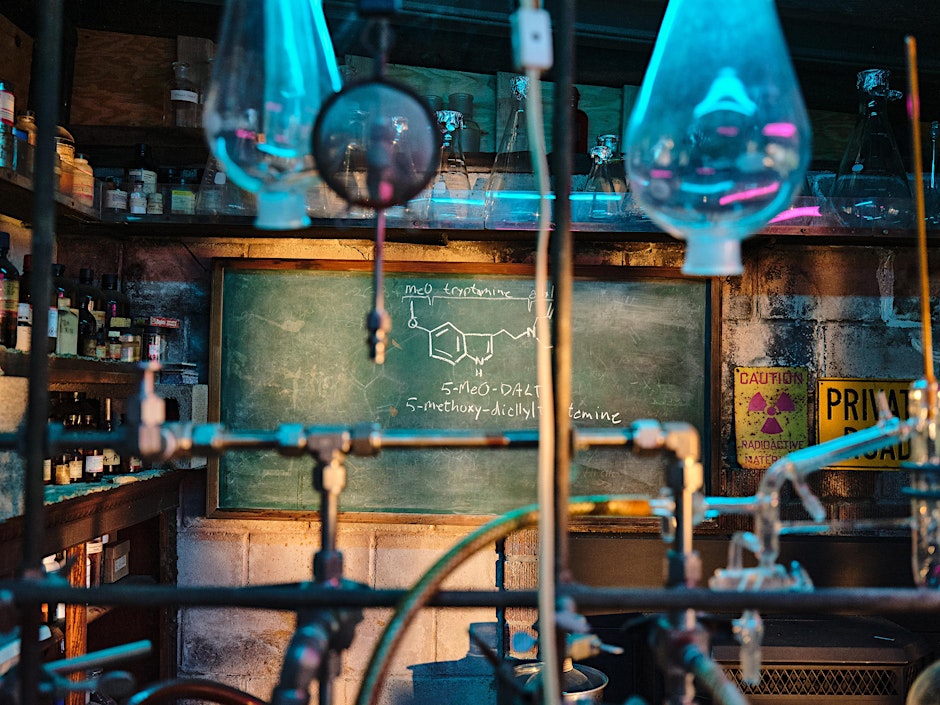
In this intimate class, Dr. Paul Daley, latter-day colleague and sidekick of the legendary psychedelic chemist, Sasha Shulgin, guides us through the groundbreaking work Shulgin did in the realm of novel tryptamine chemistry, sharing insights into how his discoveries have shaped the field and where they might take us in the future. If anyone has had the pleasure of a whiteboard chemistry lesson from Paul, tucked by the fireplace in Sasha's old lab, you know how special it feels to be an audience to his curiosity and wonder. This is a rare opportunity to learn from someone who learned from Sasha himself.
Sasha Shulgin's Last Stand: Exploring a Luminary's Final Compounds with Dr. Paul Daley
In this intimate class, Dr. Paul Daley, latter-day colleague and sidekick of the legendary psychedelic chemist, Sasha Shulgin, guides us through the groundbreaking work Shulgin did in the realm of novel tryptamine chemistry, sharing insights into how his discoveries have shaped the field and where they might take us in the future. If anyone has had the pleasure of a whiteboard chemistry lesson from Paul, tucked by the fireplace in Sasha's old lab, you know how special it feels to be an audience to his curiosity and wonder. This is a rare opportunity to learn from someone who learned from Sasha himself.
Separation, Purification and Analysis of Psychoactive Substances with Dr. Paul Daley
Many interesting and useful compounds are found in plants. In this session, Dr. Paul Daley addresses basic chemistry relevant to isolating these materials through plant extraction, cleanup of crude preparations, compound separation, and analytical detection. Important concepts include the nature of partitioning between phases (immiscible liquid pairs, stationary and moving liquid phases, and liquid and moving vapor phases), used routinely in cleanup and chromatography.
Oral Histories of the Psychedelic Underground with Maria Mangini and Adele Getty
Much of psychedelic history has been erased, forgotten, or never formally recorded — clandestine out of necessity. At this gathering at Shulgin Farm, we took the opportunity to talk about lost information in the archives, to honor the missing decades of underground practice, and to recognize the women and elders who have carried this wisdom forward. This intimate AMA featured Adele Getty and Maria Mangini, two longtime contributors to the psychedelic movement whose lives and work illuminate the sacredness of community care.
Octopuses on Ecstasy and the Future of Psychedelics with Dr. Gül Dölen and Joe Dolce
Shulgin Foundation hosted neuroscientist Dr. Gül Dölen and Joe Dolce, author of Modern Psychedelics: The Handbook for Mindful Exploration, for an eye-opening talk on Dr. Dölen’s research, which is changing how we think about psychedelics and their effects on the brain. Her early work showed that even octopuses become more social on MDMA, suggesting these effects go back millions of years. More recent studies suggest psychedelics could reopen "critical periods" in the brain—windows when we’re especially open to learning. They explore how this science could shape new treatments for conditions like depression, addiction, and PTSD, and what it might tell us about consciousness itself.
Sign Up to Receive Our Latest News
"*" indicates required fields